SevenRooms vs. OpenTable. Which platform will be better for my business? It's one of the most common questions restaurant owners ask when they're trying to improve reservations and get a better handle on their guests.
Both platforms offer tools for the hospitality industry: online reservations, guest management, marketing features, and more. But they're built with different goals in mind. And what's right for your operation depends a lot on what problem you're actually trying to solve.
There's also been a big change: DoorDash acquired SevenRooms in June 2025 for $1.2 billion.
SevenRooms still operates independently, but it's now part of a larger delivery and commerce ecosystem. This could mean more integrations down the road, but it also means that DoorDash now has a seat at your reservations table.
Let's break down both platforms and help you figure out which one actually fits your restaurant.
Quick Reservation Platform Comparison: SevenRooms vs. OpenTable
Before we get into the details, here's a side-by-side overview of the two platforms:
About SevenRooms
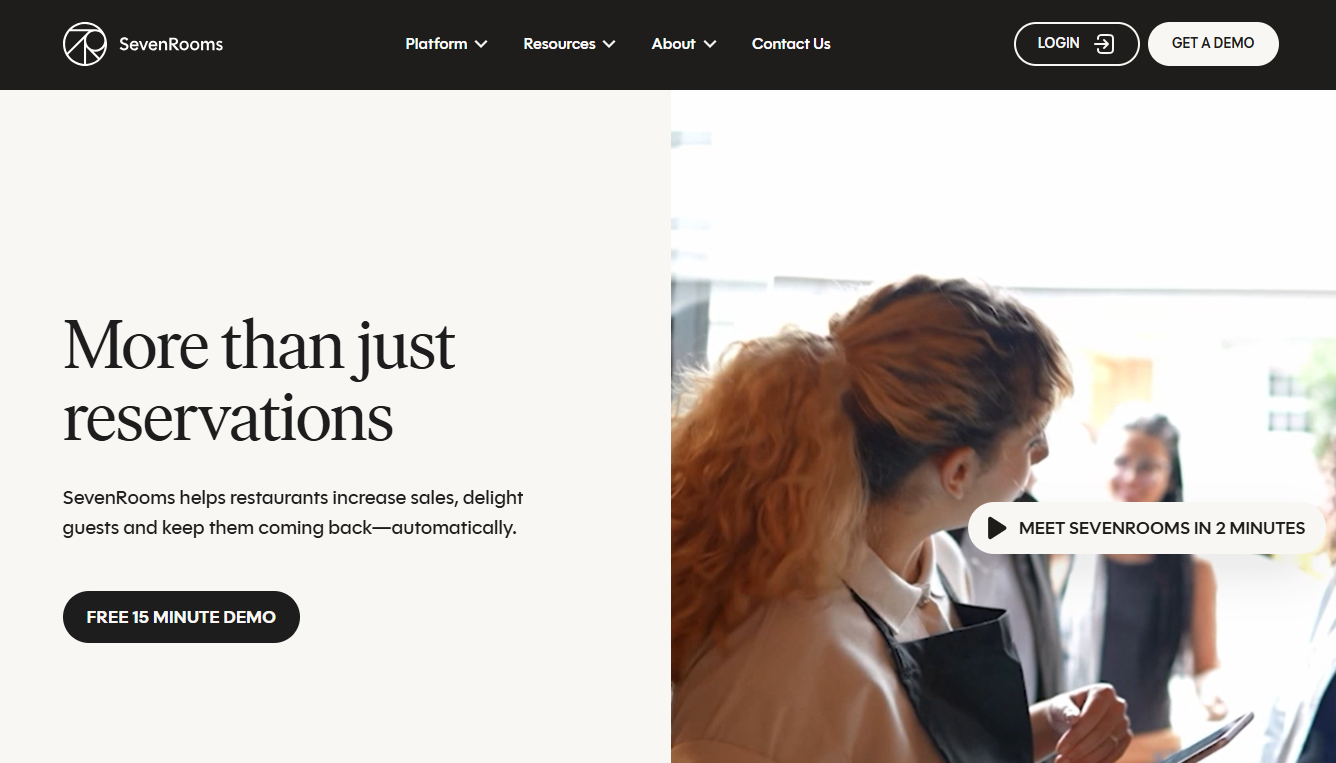
SevenRooms is a reservation and guest management platform built for the hospitality industry. It's used by restaurants, hotels, nightclubs, bars, sports venues, breweries, and membership clubs. Basically any operator who wants deeper insight into who their guests are and how to keep them coming back.
The big news: SevenRooms is now part of DoorDash. The $1.2 billion acquisition closed in June 2025.
For now, SevenRooms operates as its own product, but if having DoorDash in your tech stack gives you pause, it's worth factoring that in.
See our full SevenRooms review.
Who Is SevenRooms Suited to?
SevenRooms works best for larger hospitality operators and multi-venue groups that want to own their guest relationships and build smart marketing around real data. If you're running a single neighborhood restaurant that mostly needs a solid reservations widget, it may be more platform than you need – both in features and in cost.
Top Features
- CRM and guest profiles: SevenRooms comes with a built-in CRM that builds detailed profiles on your guests. This includes their dining preferences, spending habits, special requests, visit frequency, etc. It lets you tag and segment them however you need.
- Marketing automation: Set up email and SMS campaigns that trigger automatically. Birthday offers, lapsed-guest win-backs, post-visit follow-ups. All of it can run without you touching it each time.
- Reservations and waitlist: Online bookings with guest data collection built in. Guests can join the waitlist through a queue management app.
- Events and experiences: Create and sell tickets to events guests can book directly.
- Direct booking on your website: SevenRooms lets guests book directly through your own site, which means you keep the relationship and avoid paying per-cover fees to a third party.
- Loyalty programs: Fully customizable programs you can build around your own guests' behaviors to encourage repeat visits and drive revenue.
- Feedback and review management: Automated post-visit feedback forms, plus tools to track and respond to online reviews.
- Reporting: Detailed analytics to understand your guests and your business.
- POS and operations integrations: Connects to your point-of-sale system and pickup/delivery workflows.
SevenRooms Pricing
SevenRooms doesn't publish pricing publicly. You'll need to contact their team for a quote. Their site indicates that they offer three packages with multiple add-ons so that you can tailor the plan more to your operation. No cover fees.
About OpenTable
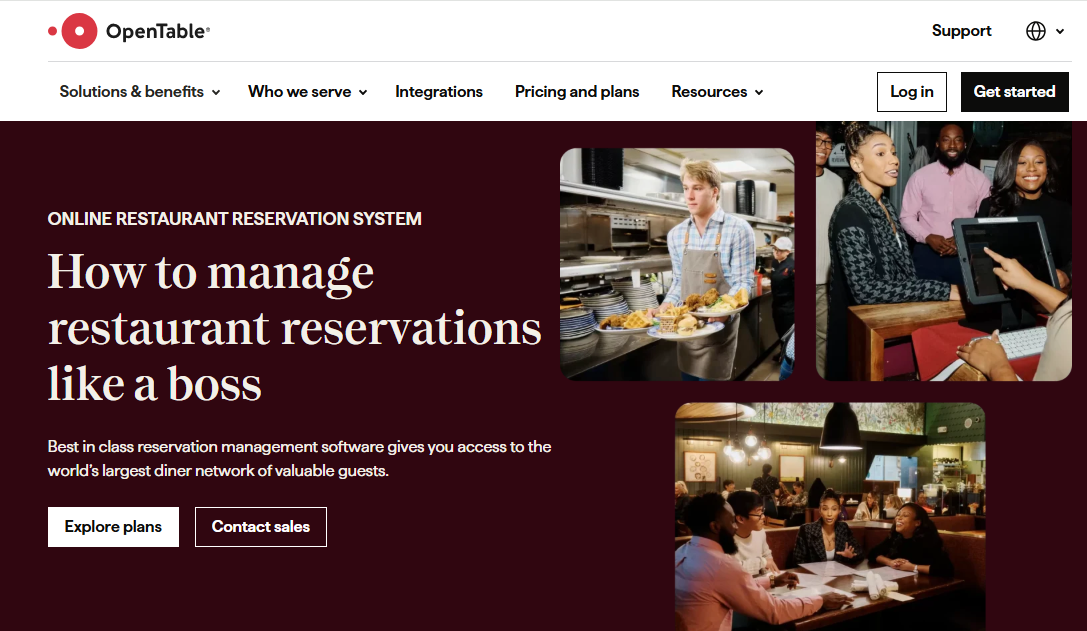
OpenTable is the most widely used restaurant reservation platform in the world. It holds around 39% market share in the restaurant reservation software category, with over 24,000 restaurant customers.
Diners use the OpenTable app and website to discover restaurants, read reviews, and book tables. Connecting diners with restaurants at scale is what OpenTable does best. It's a meaningful source of new bookings that other platforms don't offer in the same way.
That discoverability is OpenTable's biggest selling point. The trade-off is that OpenTable owns a lot of the relationship with your diners. And the per-cover fees add up fast for busy restaurants.
Read our full OpenTable review.
Who Is OpenTable Suited to?
OpenTable works well for restaurants, bars, cafes, and hospitality businesses that want to increase their visibility and fill seats from a large, established network of diners.
It's also practical for venues that want straightforward reservation management without a steep learning curve.
Top Features
- Reservations and discovery: OpenTable runs one of the largest consumer-facing restaurant marketplaces in the world. Millions of diners use the OpenTable app and website to search for restaurants, read reviews, and book tables so your listing reaches people who are actively looking for somewhere to eat.
- Table and floor management: Manage your floor plan, turn times, and waitlists from one view. Front of house staff can see everything they need in a single dashboard.
- Guest profiles: Captures customer data including booking history, dining preferences, and special occasions, which restaurants can use to personalize the experience.
- Email marketing: Send campaigns to past guests to drive repeat visits and promote specials or events across multiple channels.
- Experiences: Restaurants can create and promote their own branded events directly on OpenTable, reaching diners already browsing the platform.
- Reputation management: Tools to monitor and respond to guest reviews.
- Integrations: Connects with POS systems, email marketing platforms, content management systems, and booking ad delivery partners.
- Promoted placements: Restaurants can pay to appear at the top of search results within OpenTable's marketplace, helping drive more bookings during specific time slots or seasons.
OpenTable Pricing
OpenTable is more upfront about what you'll pay. There are three plan tiers:
- Basic: $149/month – covers core reservation tools. Free for the first 30 days.
- Core: $299/month – adds floor plans, POS integration, and more advanced features.
- Pro: $499/month – includes custom guest profiles and email campaigns.
The monthly fee is only part of the cost. OpenTable also charges per-cover fees for reservations that come through its network.
For a busy restaurant doing 1,000+ network covers a month, those fees can exceed the subscription cost itself. Make sure you run the real numbers for your volume before deciding.

OpenTable vs. SevenRooms: The Key Differences
These two platforms overlap in the basics (reservations, table management, guest data) but they have very different philosophies about what a reservation platform should do.
Discovery vs. Retention
OpenTable's consumer app and website give restaurants exposure to millions of diners who use the platform to find somewhere to eat. That discoverability is a meaningful source of new bookings. SevenRooms doesn't have a guest-facing marketplace, but it gives operators deeper tools to build relationships with existing guests and bring them back more often.
Guest Data
Both platforms collect guest data. With OpenTable, diners who book through the marketplace live inside OpenTable's ecosystem. The restaurant captures what guests share at the time of booking.
SevenRooms gives operators full ownership of all guest data and a more detailed restaurant CRM layer, which means more flexibility in how you segment and market to your guests over time. For operators where customer loyalty is the main goal, that level of data access makes a real difference.
Marketing Depth
OpenTable includes email marketing tools for reaching past guests. SevenRooms goes further with automated campaigns triggered by specific guest behaviors, SMS marketing, segmentation by spend or visit frequency, and customizable loyalty programs. This makes it a stronger fit for operators who want to run ongoing marketing without building everything manually.
Guest Experience
Both platforms give you tools to personalize the guest experience. OpenTable captures guest preferences and booking history so staff can acknowledge regulars and note special requests.
SevenRooms builds on that with detailed behavioral data like what guests order, how much they spend, and how often they visit. Capturing these details means you can tailor every interaction more precisely.
Additionally, SevenRooms automates post-visit follow-ups, which keeps the relationship going between visits.

What About Events?
If you're a restaurant or venue that regularly books private events, neither platform is built for that workflow.
Both SevenRooms and OpenTable let you advertise experiences and take reservations, but they don't handle the full event sales process: inquiry management, custom proposals, contract signing, deposit collection, or a dedicated events calendar.
That's a different category of software.
And that's exactly what Perfect Venue is built for. Our event management software is designed specifically for restaurants, breweries, caterers, and independent venues so you can handle the entire process from first inquiry to final payment without juggling email threads and spreadsheets.
You can check it out with a free trial – no demo required!
SevenRooms vs. OpenTable – Which Is the Right Platform for Your Restaurant?
The honest answer is that it depends on what your restaurant actually needs most right now.
Go with OpenTable if: you want to increase visibility and get in front of new diners through a large consumer network, you're a smaller operation that wants clear pricing, or you need a straightforward reservation system without a lot of setup. OpenTable remains the strongest option when discoverability is the priority.
Choose SevenRooms if: you're a larger operation or multi-venue group that wants full control over your guest data, you have the budget and team to make use of advanced CRM and marketing automation, or reducing your reliance on third-party platforms is a priority.
And if private events are a meaningful part of your revenue? Don't expect either platform to solve that. Check out what purpose-built event management software can do that reservation tools can't.